04. Flexibility
All floors wear over time, and changes in buildings and production facilities are common – such as replacement of machinery, furniture, and other equipment. With Acrylicon, such challenges can be resolved in a simple and efficient way.
The key lies in the chemistry
Different resin products have different chemical behavior when it comes to repair and renewal. Thermoset floors, such as epoxy and PU, cannot be reactivated after curing. This means that new layers or repairs are only mechanically bonded, essentially glued, to the existing layer.
When repairing an epoxy or PU floor, the damaged section must be removed and a new layer applied. However, the new layer will only bond mechanically to the existing floor, which can lead to weaknesses at the joints (bond lines). These weaknesses can in turn lead to reduced durability and increased risk of delamination.
The most important reason why many Acrylicon floors are still in service after more than 30 years is that they can be repaired and renewed without losing quality.
Acrylicon’s unique advantages
Unlike thermoset products, Acrylicon floors can be repaired and renewed with chemical bonding. When damage occurs, the floor can be ground down and a new top coat applied. The new layer bonds chemically to the existing floor, so that the result is an integrated, monolithic surface – without weaknesses at joints or bonds between the layers.
With Acrylicon, you get a floor that not only stands the test of time, but can also be adapted and renewed to meet future needs.
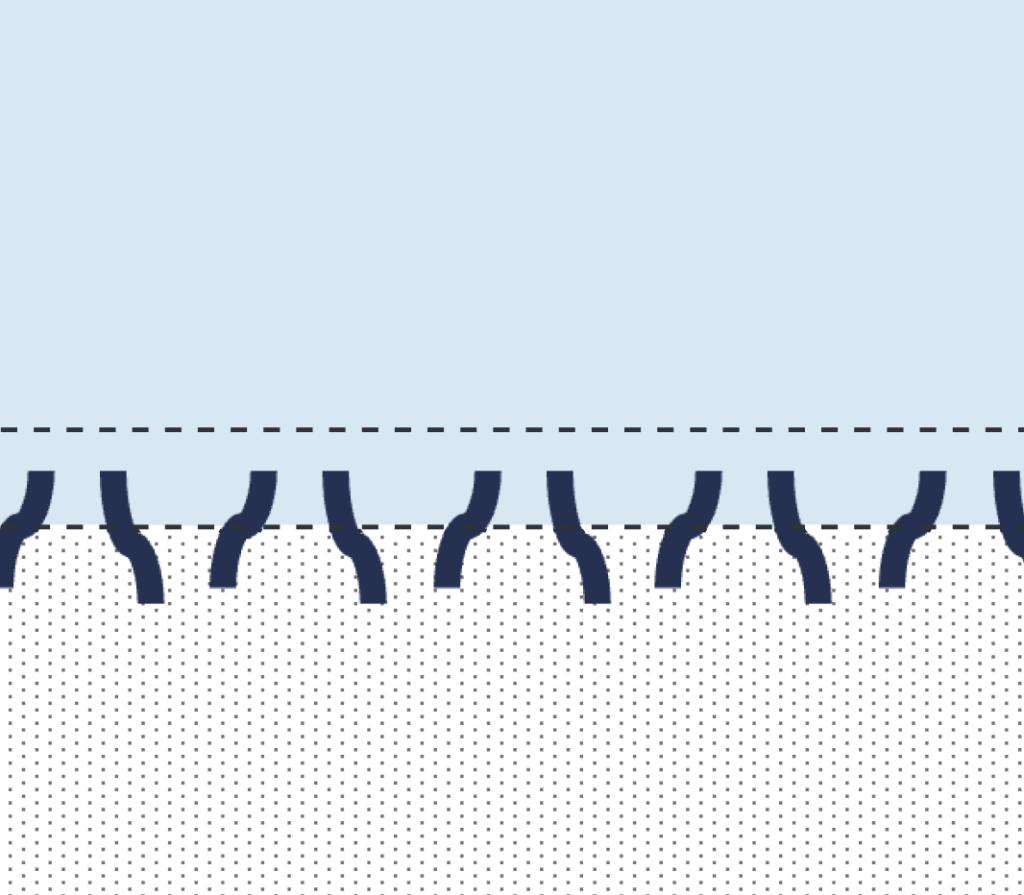
Thermoplastic flooring
Acrylic and Acrylicon
New chemical bonding possible. Repairs and new top coats bond to the existing floor.

Thermoset flooring
Epoxy and polyurethane
New chemical bonding not possible. Repairs and new top coats do not bond to the existing floor.
Seven good reasons to choose Acrylicon